Disclaimer: AureX Tek does not operate, promote, or endorse any public investment scheme. The company has not authorized any individual, entity, or organization to solicit, collect, or accept funds or investments on its behalf. Any such activity is unauthorized and undertaken at the sole risk of the individual involved.

Digital Transformation Roadmap for Enterprises: Turning Strategy into Scalable Executionst
I have shared a detailed perspective on how organizations can build a practical Digital Transformation Roadmap for Enterprises, focusing on execution, data, agility, and measurable business outcomes. This is based on my experience working across IT and digital ecosystems, and how enterprises can bridge the gap between strategy and execution. Would love to hear thoughts from fellow professionals how is your organization approaching transformation in 2026?
Faisal Mahmud
5/13/20263 min read
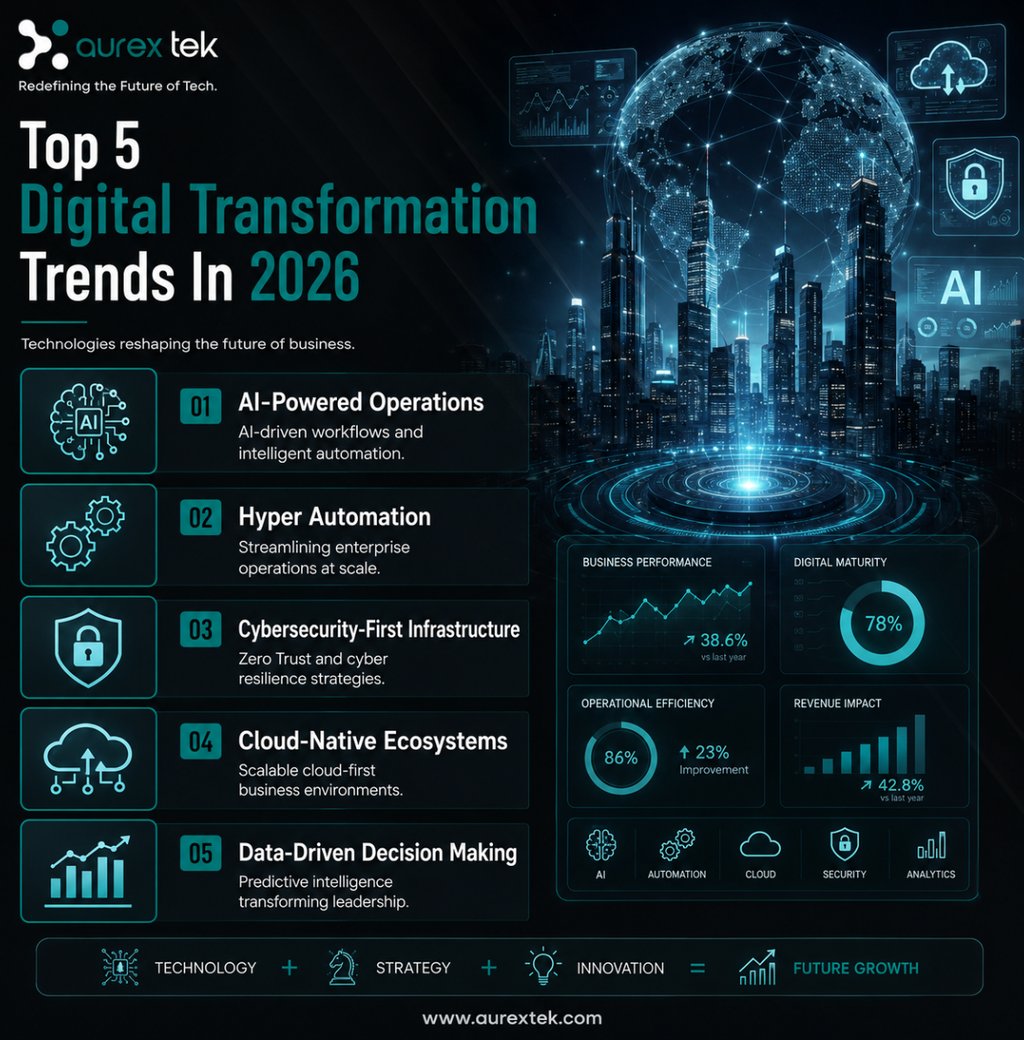
Digital transformation is no longer a competitive advantage, it is a baseline requirement for survival and growth. Yet, despite heavy investments in technology, many enterprises still struggle to translate transformation initiatives into measurable business outcomes. The gap is not in technology availability. It is in execution clarity, alignment, and sustained adoption.
This article outlines a practical Digital Transformation Roadmap for Enterprises that moves beyond buzzwords and focuses on structured execution, governance, and value realization.
1. Start with Business First, Not Technology First Thinking
A common mistake enterprises make is starting transformation with tools ERP upgrades, cloud migrations, or AI pilots without clearly defining business outcomes.
A successful roadmap begins with three foundational questions
What business problems are we solving?
What customer experience are we improving?
What operational inefficiencies must be eliminated?
Digital transformation should always map to measurable outcomes such as:
Revenue growth
Cost optimization
Customer experience improvement
Time-to-market reduction
Risk reduction and compliance efficiency
Without this alignment, transformation becomes an IT modernization exercise rather than a business evolution strategy.
2. Build a Clear Digital Maturity Assessment
Before moving forward, enterprises must understand where they currently stand.
A structured maturity assessment typically evaluates:
Digital infrastructure readiness (cloud, network, security)
Data maturity (data quality, accessibility, governance)
Process automation level
Customer engagement channels
Workforce digital skills
Decision-making maturity (data-driven vs. intuition-based)
This baseline helps organizations avoid overestimating readiness and underestimating complexity.
A realistic maturity view also helps prioritize investments instead of trying to transform everything at once.
3. Define a Phased Transformation Strategy
Transformation cannot happen in a single leap. Enterprises must adopt a phased roadmap approach:
Phase 1: Foundation Modernization
Focus on core systems and infrastructure:
Cloud migration strategy (hybrid or full cloud)
Cybersecurity strengthening
Network modernization
Data consolidation and warehousing
Phase 2: Process Digitization
Focus on operational efficiency:
Workflow automation (RPA and AI-based automation)
ERP and CRM integration
Digital document management
Supply chain digitization
Phase 3: Data-Driven Enterprise
Focus on intelligence:
Advanced analytics
Predictive modeling
Real-time dashboards
AI-assisted decision-making
Phase 4: Intelligent Enterprise
Focus on innovation:
AI-native operations
Autonomous systems
Personalized customer journeys
Continuous optimization through machine learning
Each phase should have defined KPIs, budgets, and ownership structures.
4. Prioritize Data as the Core Asset
Modern digital transformation is fundamentally a data transformation initiative.
Enterprises must move from:
Data silos → Unified data ecosystems
Historical reporting → Real-time intelligence
Manual analysis → AI-assisted insights
Key enablers include:
Centralized data architecture
Strong data governance policies
Master data management (MDM)
Data security and compliance frameworks
Without data integrity, even the most advanced AI systems fail to deliver reliable outcomes.
5. Align Technology Architecture with Business Agility
Legacy IT architectures are one of the biggest blockers to transformation.
Enterprises must transition toward:
Cloud-native infrastructure
API-driven ecosystems
Microservices architecture
Scalable SaaS-based platforms
This shift enables:
Faster deployment cycles
Easier system integration
Reduced operational overhead
Improved scalability
The goal is not just modernization, it is agility.
6. Invest in People and Culture Transformation
Technology transformation fails without cultural transformation.
Enterprises must focus on:
Digital Skills Development
Cloud computing literacy
Data analytics capabilities
AI and automation awareness
Cybersecurity hygiene
Change Management
Clear communication of transformation goals
Leadership alignment at all levels
Resistance management strategies
Agile Mindset Adoption
Iterative development cycles
Rapid experimentation
Failure-tolerant innovation culture
A digitally mature enterprise is defined more by mindset than tools.
7. Strengthen Governance and Execution Frameworks
One of the most overlooked aspects of transformation is governance.
A strong governance model includes:
A dedicated digital transformation office (DTO)
Executive steering committees
Program level KPI tracking
Vendor and partner accountability frameworks
Without governance, transformation initiatives become fragmented and lose momentum.
Execution discipline is what separates successful transformations from failed ones.
8. Focus on Customer Centric Transformation
At the heart of digital transformation is the customer.
Enterprises must redesign experiences across:
Digital onboarding journeys
Omni channel engagement (web, mobile, social, in-person)
Customer support automation
Personalized product and service offerings
Customer experience should not be a department it should be a design principle across the enterprise.
9. Measure Success Through Business KPIs, Not IT Metrics
Transformation success should never be measured only in technical terms.
Instead, focus on business outcomes such as:
Revenue per customer increase
Customer acquisition cost reduction
Operational cost savings
Process cycle time reduction
Net promoter score (NPS) improvement
Technology is only successful when it produces measurable business impact.
10. Continuous Transformation, Not One Time Projects
The most important shift in thinking is this:
Digital transformation is not a project—it is a continuous capability.
Markets evolve. Technologies change. Customer expectations rise.
Enterprises must build:
Continuous improvement cycles
Innovation labs
Emerging technology scouting teams
Feedback-driven development models
The goal is not completion it is adaptability.
Final Thoughts
A successful Digital Transformation Roadmap for Enterprises is not defined by how many technologies are adopted, but by how effectively the organization:
Aligns strategy with execution
Integrates data into decision-making
Builds scalable and agile systems
Empowers people to adapt and innovate
Delivers measurable business value
Enterprises that treat transformation as a structured journey not a series of disconnected IT projects will lead the next decade of industry disruption.
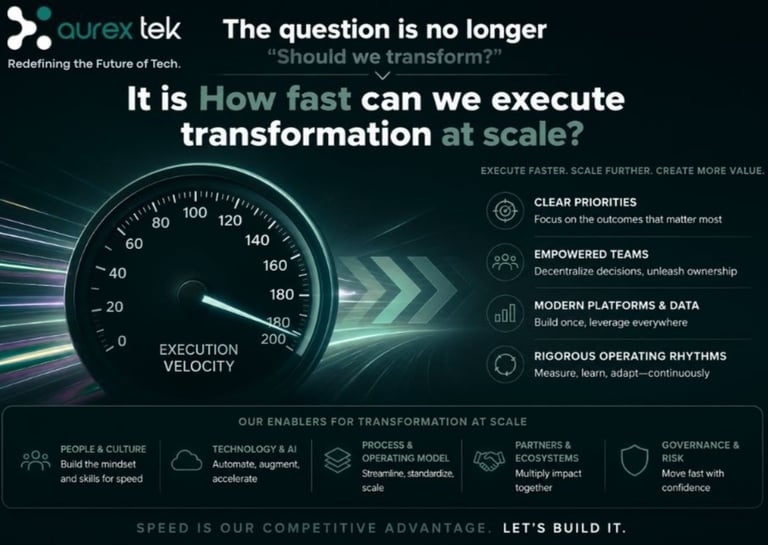
The question is no longer “Should we transform?” It is
“How fast can we execute transformation at scale?”
Disclaimer: The ideas shared in this article are originally conceptualized by me, and AI tools were used to refine, structure, and enhance the clarity of the content.
Contact
© 2026. All rights reserved.