Disclaimer: AureX Tek does not operate, promote, or endorse any public investment scheme. The company has not authorized any individual, entity, or organization to solicit, collect, or accept funds or investments on its behalf. Any such activity is unauthorized and undertaken at the sole risk of the individual involved.

The Future of AI-Driven Cybersecurity
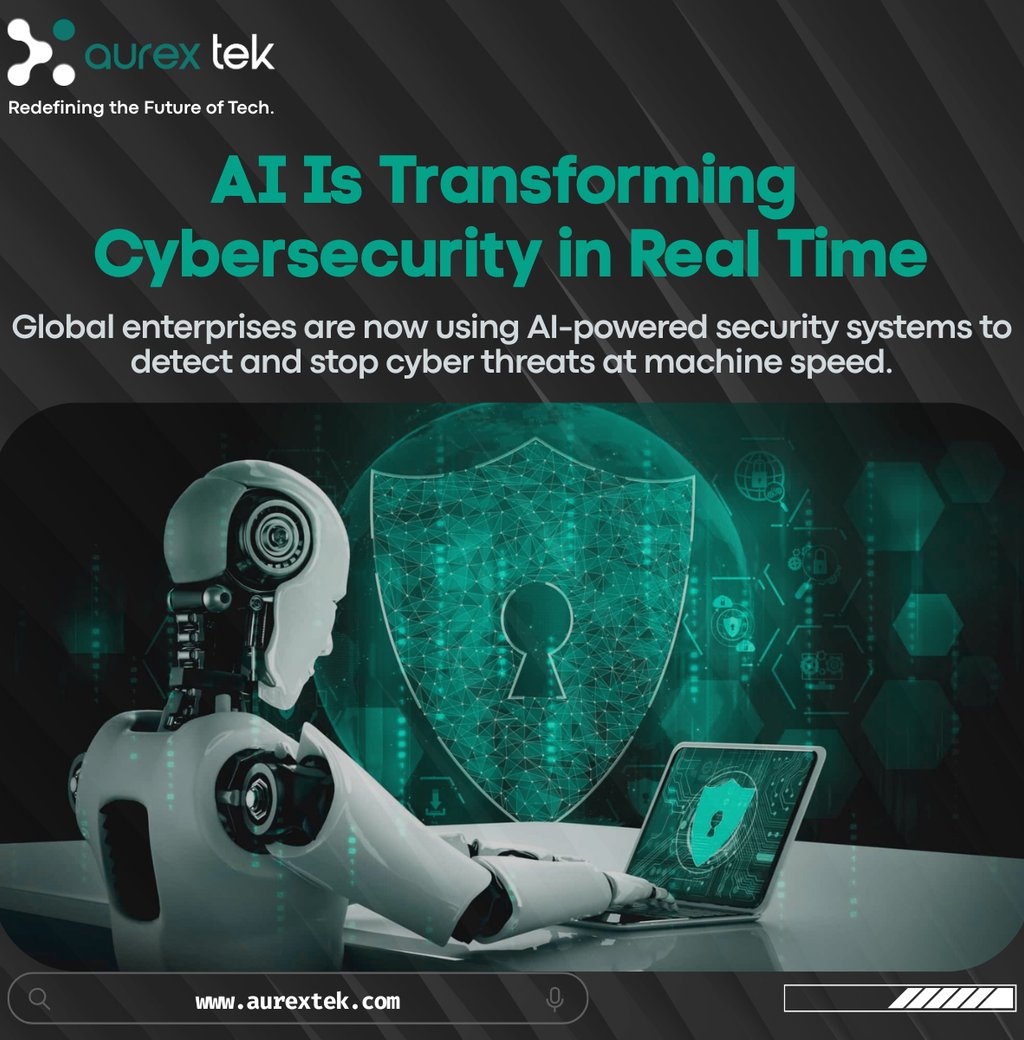
𝐂𝐲𝐛𝐞𝐫𝐬𝐞𝐜𝐮𝐫𝐢𝐭𝐲 𝐢𝐬 𝐞𝐧𝐭𝐞𝐫𝐢𝐧𝐠 𝐚 𝐜𝐨𝐦𝐩𝐥𝐞𝐭𝐞𝐥𝐲 𝐧𝐞𝐰 𝐞𝐫𝐚. AI is no longer just powering businesses, it is now becoming the frontline of enterprise defense. In this blog I explore how AI-driven cybersecurity is transforming: • 𝐓𝐡𝐫𝐞𝐚𝐭 𝐃𝐞𝐭𝐞𝐜𝐭𝐢𝐨𝐧 • 𝐂𝐥𝐨𝐮𝐝 𝐒𝐞𝐜𝐮𝐫𝐢𝐭𝐲 • 𝐙𝐞𝐫𝐨 𝐓𝐫𝐮𝐬𝐭 𝐀𝐫𝐜𝐡𝐢𝐭𝐞𝐜𝐭𝐮𝐫𝐞 • 𝐀𝐮𝐭𝐨𝐧𝐨𝐦𝐨𝐮𝐬 𝐒𝐎𝐂 𝐎𝐩𝐞𝐫𝐚𝐭𝐢𝐨𝐧𝐬 • 𝐏𝐫𝐞𝐝𝐢𝐜𝐭𝐢𝐯𝐞 𝐓𝐡𝐫𝐞𝐚𝐭 𝐈𝐧𝐭𝐞𝐥𝐥𝐢𝐠𝐞𝐧𝐜𝐞 As cyber threats become faster, smarter, and more automated, traditional security models are struggling to keep pace. The future belongs to organizations that combine: 𝐀𝐈 + 𝐂𝐲𝐛𝐞𝐫𝐬𝐞𝐜𝐮𝐫𝐢𝐭𝐲 + 𝐀𝐮𝐭𝐨𝐦𝐚𝐭𝐢𝐨𝐧 + 𝐂𝐥𝐨𝐮𝐝 𝐒𝐞𝐜𝐮𝐫𝐢𝐭𝐲 This blog highlights how enterprises can build resilient, intelligent, and future-ready security ecosystems in the age of digital transformation. Would love to hear your thoughts on the future of AI-powered cybersecurity.
Faisal Mahmud
5/4/20264 min read
How Artificial Intelligence Is Reshaping Enterprise Security in the Digital Era
Cybersecurity is no longer just an IT concern. In today’s hyperconnected digital economy, cybersecurity has become a core business strategy directly tied to operational continuity, customer trust, regulatory compliance, and long-term growth.
As organizations accelerate digital transformation, cloud adoption, remote workforce expansion, and AI integration, the cyber threat landscape is evolving faster than ever before. Traditional security models are struggling to keep pace.
This is where Artificial Intelligence is transforming cybersecurity from a reactive defense mechanism into an intelligent, predictive, and autonomous security ecosystem.
The future of cybersecurity will not be defined by companies with the largest security teams.
It will belong to organizations with the smartest AI-driven security strategies.
The Growing Complexity of Cyber Threats
Modern cyberattacks are becoming:
Faster
Smarter
Automated
More targeted
More difficult to detect
Today’s enterprises face threats such as:
AI-powered phishing attacks
Advanced ransomware campaigns
Insider threats
Zero-day vulnerabilities
Cloud security breaches
Deepfake-driven social engineering
Supply chain attacks
Cybercriminals are increasingly leveraging automation, machine learning, and AI tools to launch sophisticated attacks at scale.
In many cases, attacks now evolve faster than traditional security teams can respond.
This shift is forcing enterprises to rethink their entire cybersecurity strategy.
Why Traditional Cybersecurity Models Are Failing
Traditional cybersecurity approaches were designed for a different era.
Most legacy security frameworks rely heavily on:
Manual monitoring
Rule-based systems
Reactive incident response
Human-driven analysis
While these methods still play a role, they are no longer sufficient against modern cyber threats Security Operations Centers (SOCs) are overwhelmed with:
Massive alert volumes
False positives
Complex attack patterns
Shortage of skilled cybersecurity professionals
As attack surfaces expand across:
Cloud environments
Remote endpoints
IoT devices
Multi-cloud ecosystems
AI-driven applications
organizations require cybersecurity systems capable of operating at machine speed.This is where AI-driven cybersecurity becomes essential.
What Is AI-Driven Cybersecurity?
AI-driven cybersecurity refers to the use of:
Artificial Intelligence
Machine Learning
Predictive analytics
Behavioral analysis
Intelligent automation
to detect, prevent, analyze, and respond to cyber threats in real time. Unlike traditional security tools, AI-powered systems continuously learn from:
Network behavior
Threat intelligence
Historical attack patterns
User activity
System anomalies
This allows organizations to identify suspicious behavior before significant damage occurs. AI transforms cybersecurity from:
❌ Reactive security to ✅ Predictive and autonomous defense
How AI Is Transforming Cybersecurity
1. Real-Time Threat Detection
One of the biggest advantages of AI-driven cybersecurity is speed. AI systems can analyze billions of data points in real time to identify:
Unusual behavior
Malware signatures
Insider threats
Abnormal network activity
This significantly reduces detection time and improves incident response capabilities. In many cases, AI can identify threats before human analysts even notice them.
2. Predictive Threat Intelligence
Modern AI systems can predict potential attack vectors by analyzing:
Global cyber threat trends
Historical attack patterns
Vulnerability databases
Behavioral anomalies
Predictive intelligence allows organizations to proactively strengthen defenses before attacks occur. This marks a major shift from reactive cybersecurity to proactive cyber resilience.
3. Automated Incident Response
Cybersecurity teams are under increasing pressure to respond faster. AI automation helps organizations:
Isolate compromised systems
Block malicious traffic
Automate security workflows
Reduce response times
Minimize operational disruption
Automated response capabilities are becoming critical as ransomware and AI-powered attacks continue to rise globally.
4. AI-Powered Security Operations Centers (SOC)
The future SOC will be heavily AI-driven. AI-powered SOCs can:
Prioritize threats intelligently
Reduce alert fatigue
Automate repetitive tasks
Improve analyst efficiency
Accelerate investigation processes
This enables cybersecurity professionals to focus on strategic threat management rather than manual operational work.
5. Enhanced Cloud Security
As enterprises rapidly adopt cloud computing and multi-cloud environments, cloud security has become a major priority. AI strengthens cloud security by
Monitoring cloud configurations
Detecting access anomalies
Identifying risky user behavior
Preventing unauthorized access
Automating compliance monitoring
AI-powered cloud security platforms are becoming essential for modern digital infrastructure.
The Rise of Autonomous Cybersecurity
One of the most important developments in cybersecurity is the emergence of autonomous security systems. Future cybersecurity environments will increasingly rely on:
Self-learning algorithms
Autonomous threat detection
Intelligent network defense
Automated vulnerability management
In many cases, AI systems will make security decisions without human intervention. This evolution is particularly important because cyberattacks are becoming:
Faster
More complex
Highly automated
Human-only defense models cannot scale at the same pace.
Challenges of AI-Driven Cybersecurity
Despite its advantages, AI-driven cybersecurity also introduces new challenges.
AI-Powered Attacks
Cybercriminals are now using AI themselves to:
Create advanced phishing campaigns
Bypass security filters
Generate malware variants
Launch automated attacks
This creates an ongoing AI vs AI cybersecurity battle.
Data Privacy & Ethical Concerns
AI systems rely heavily on data collection and behavioral analysis. Organizations must ensure:
Data privacy compliance
Ethical AI usage
Transparent AI governance
Regulatory alignment
Cybersecurity strategies must balance innovation with responsible AI practices.
Skills Gap
AI-driven cybersecurity requires highly specialized expertise in:
Machine learning
Security analytics
Cloud security
Threat intelligence
AI governance
The global cybersecurity talent shortage remains one of the industry’s biggest challenges.
Why Businesses Must Prepare Now
The future of cybersecurity is not optional. Organizations that fail to modernize their cybersecurity frameworks risk:
Financial losses
Operational disruption
Regulatory penalties
Reputational damage
Loss of customer trust
Forward-thinking enterprises are now investing in: ✔ AI-powered security platforms ✔ Zero Trust architecture ✔ Cloud-native security models ✔ Security automation ✔ Intelligent threat intelligence
because they understand one thing: Cybersecurity is no longer just protection. It is a competitive advantage.
The Future of Enterprise Security
Over the next decade, AI-driven cybersecurity will become the standard for enterprise defense. We will see:
Autonomous SOC environments
AI-powered threat hunting
Intelligent digital identity protection
Predictive cyber resilience
Fully automated incident response ecosystems
Organizations that embrace AI-driven cybersecurity early will benefit from:
Faster operations
Stronger resilience
Lower risk exposure
Improved customer trust
Greater business continuity
Final Thoughts
The future of cybersecurity will be shaped by Artificial Intelligence. As cyber threats become increasingly sophisticated, businesses can no longer rely solely on traditional security models.AI is transforming cybersecurity into:
✔ Intelligent defense ✔ Predictive protection ✔ Automated resilience ✔ Real-time threat management
The companies that successfully combine: AI + Cybersecurity + Cloud + Automation
will define the next generation of secure digital enterprises. The question is no longer whether businesses should adopt AI-driven cybersecurity.The real question is:
👉 How quickly can they adapt before the threat landscape evolves again?
ArtificialIntelligence #CyberSecurity #AI #DigitalTransformation #CloudComputing #MachineLearning #EnterpriseIT #DataSecurity #Innovation #FutureOfWork #CyberDefense #InformationSecurity #AIAutomation #Technology #BusinessGrowth #ITStrategy #CloudSecurity #ZeroTrust #Automation #DigitalInnovation #ThreatIntelligence #CyberResilience #AIRevolution #SecurityOperations #FutureTech #AureXTek
Contact
© 2026. All rights reserved.